Cleared Surfaces When Access Cannot Wait
Snow removal in Idaho Falls for commercial and residential properties with accumulation blocking access, parking, or entryways
Idaho Falls carries a significant share of mid-century and post-war construction, with commercial properties along arterial corridors and residential developments spanning everything from compact downtown lots to sprawling newer subdivisions on the city's east and north sides. Wolverine Concrete handles snow removal across both commercial and residential properties in Idaho Falls, bringing the same operational attention to a retail parking lot as to a residential driveway. The distinction matters because the access requirements, surface conditions, and timing pressures differ substantially between a storefront that opens at six in the morning and a residence where a single clear path to the street is the primary concern.
Snow removal at the commercial level typically involves clearing parking fields, drive lanes, loading dock aprons, and walkways in a coordinated sequence so that each surface is passable before foot traffic begins. On residential properties, the sequence usually prioritizes the driveway apron, the walk to the front entry, and any secondary access point like a side gate or garage approach. Wolverine Concrete manages that sequencing rather than treating every surface as an undifferentiated area to push snow across. The difference shows up in where snow is stacked—placing accumulation incorrectly can block sightlines at a commercial entrance or push runoff toward a foundation on an older home.
Schedule a property walkthrough with Wolverine Concrete to review the access priorities, surface types, and stacking areas specific to your property before the season's first significant accumulation.
How Snow Removal Is Managed Across Property Types
The approach to any snow removal job starts with understanding the surface underneath and the access constraints around it. Concrete driveways, asphalt parking lots, pavers, and exposed aggregate all respond differently to equipment and to the tools used for edging and cleanup. On older Idaho Falls commercial properties with aging asphalt, aggressive scraping equipment can pull up loose surface material, so the equipment selection and blade pressure have to account for what the surface can tolerate. Residential concrete slabs poured in earlier decades are often thinner than current code requires, which affects how close to the surface a blade can work safely.
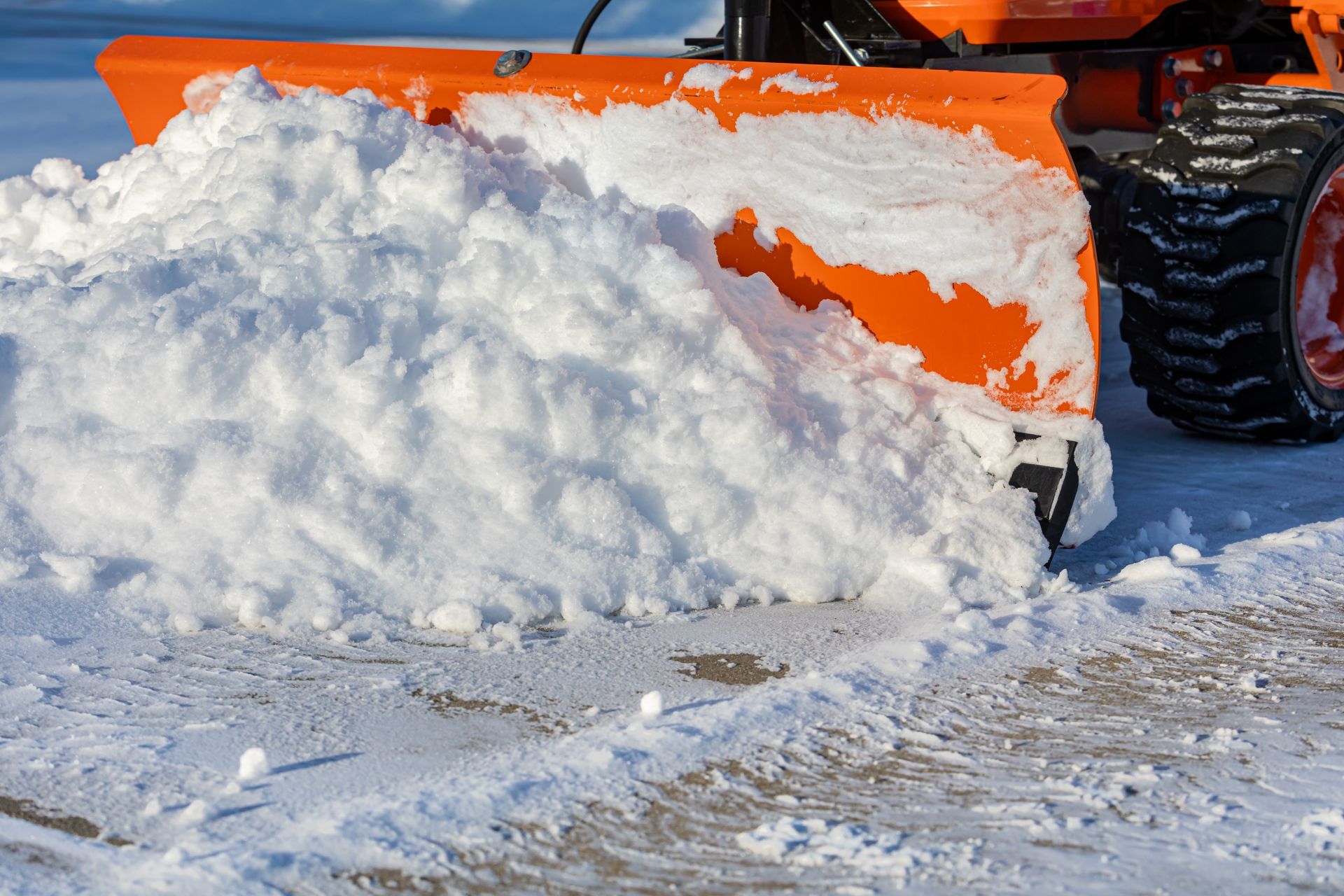
Once clearing is complete, what you notice is straightforward: the drive lane or driveway is passable from the street to the destination point without compressed snow creating traction problems, and the walkways are clear at the edge rather than narrowed by pushed accumulation on either side. On commercial properties, clear delineation between stacked snow and the active parking area is visible from the lot entrance, which matters for traffic flow and for customers navigating on foot. Wolverine Concrete positions stacked material to avoid blocking drainage structures and fire lane markings, both of which are active compliance considerations for commercial tenants.
Properties with multiple access points, loading areas, or shared lot lines require upfront agreement on which areas fall within the clearing scope and which are handled separately. That scope definition affects equipment selection, crew time, and stacking logistics, and it needs to be established before work begins rather than negotiated during a removal event.
Common Questions About Snow Removal Work
The questions below focus on how snow removal is actually performed on commercial and residential properties in Idaho Falls, covering the decisions that affect surface condition, access, and long-term pavement health.
What happens to pavement when snow is pushed and stacked repeatedly in the same location?
Repeated stacking compresses snow into ice over high-traffic areas and can trap moisture against asphalt edges, accelerating edge cracking on lots that are already showing surface fatigue. Stacking placement should rotate or use designated areas that drain away from the pavement field.
How does the surface type affect which equipment is used for residential driveways?
Exposed aggregate and older concrete slabs with shallow depth require lighter blade contact and often a rubber-edged blade rather than a steel cutting edge, which reduces the risk of pulling surface material or gouging the slab face.
What is the correct sequence for clearing a commercial parking lot so traffic can resume safely?
Drive lanes and the lot entrance are cleared first so vehicles can enter and circulate, then parking rows are cleared toward designated stacking areas, and walkways and door aprons are addressed last once vehicle traffic is established.
Why does snow stacking location matter for properties along older Idaho Falls corridors with tight lot lines?
Older commercial corridors in Idaho Falls were platted with minimal setback, meaning stacked snow quickly encroaches on sidewalk easements or neighboring property lines, which creates both access problems and potential liability for the property owner.
What should you look for in finished clearing work to assess whether the job was done correctly?
Cleared surfaces should show consistent edge definition without heavy ice ridges along the scrape line, stacked material should be positioned clear of drainage inlets and fire lane markings, and walkways should be cleared to the full usable width rather than a single-file path.
Wolverine Concrete is available to review your property layout, confirm scope for commercial or residential clearing, and establish a plan before accumulation creates an access problem. Wolverine Concrete also provides snow removal in Ammon, Shelley, Rigby, and Rexburg.