Outdoor Spaces Built for Seasonal Extremes
Decks in Idaho Falls for properties exposed to eastern Idaho UV and temperature swings
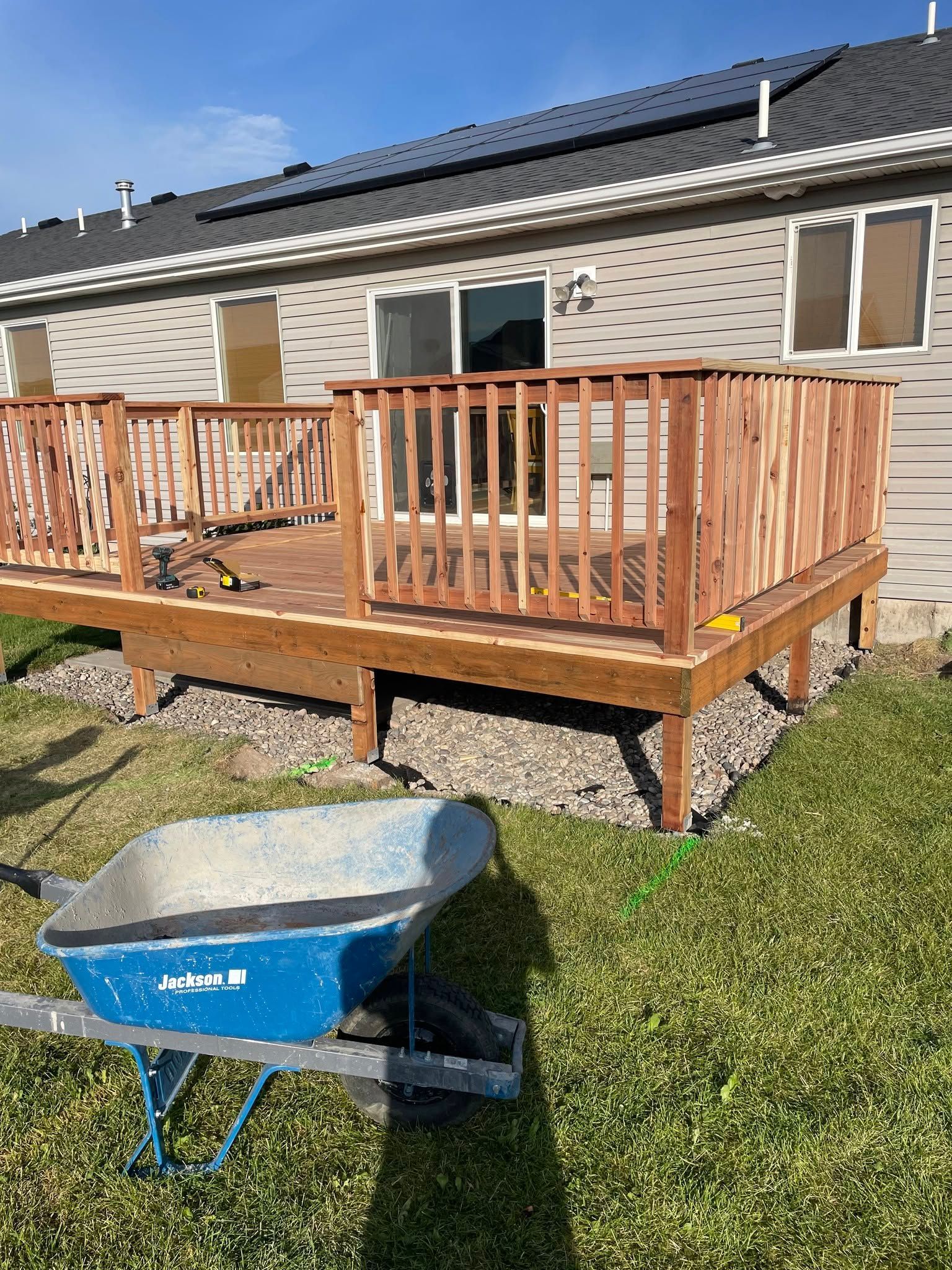
Wolverine Concrete builds residential decks across Idaho Falls using pressure-treated lumber, composite decking, or a combination of both materials selected for their performance under eastern Idaho's UV exposure and seasonal temperature shifts. The ledger connection where the deck attaches to the house is the single most common failure point in this climate, and proper flashing installation at that junction determines whether water intrusion and rot shorten the deck's lifespan. Every deck begins with a ledger connection flashed according to the siding type on your home, not a universal approach that ignores what the material requires.
Deck construction involves anchoring the ledger board to the house structure, installing footings and posts, framing the deck platform, and attaching the decking surface. Flashing method is determined by what covers the exterior wall—vinyl siding, wood lap, or stucco—because each requires a different integration to prevent moisture from reaching the wall sheathing. Eastern Idaho's freeze-thaw cycles and intense summer UV accelerate material degradation when water finds a path behind the siding.
Schedule a property evaluation to review deck size, material options, and ledger connection requirements for your home's siding type.
What Proper Ledger Flashing Prevents Long-Term
Ledger flashing is installed after the board is fastened to the house and before the deck framing continues. The flashing redirects water that runs down the siding away from the ledger board and the rim joist behind it. Without flashing matched to the siding type, water enters the wall cavity during rain and snowmelt, saturating the wood structure and creating rot that compromises both the deck attachment and the home's framing.
Once the deck is finished, you notice a structure that remains solidly attached to the house across years of use. The deck surface stays level without sagging or pulling away from the house, and no water stains appear on the siding above the ledger board. The connection holds because the flashing keeps moisture out of the attachment zone where fasteners secure the deck to the building.
Material choice between pressure-treated lumber and composite decking affects surface durability and maintenance requirements. Pressure-treated lumber shows weathering over time and requires periodic staining or sealing, while composite decking resists UV fading and does not require refinishing. Both materials handle eastern Idaho's temperature range when the substructure is built to support the decking type without excessive movement.
What Property Owners Usually Ask
These questions come up regularly when homeowners evaluate deck construction and material options for eastern Idaho conditions.
What flashing method is used for the ledger connection?
The flashing approach depends on your siding type—vinyl siding requires flashing tucked behind the siding course above the ledger, while wood lap siding may need the siding removed to install continuous flashing behind it. The flashing must extend over the ledger top edge and direct water outward.
How does composite decking perform compared to pressure-treated lumber in Idaho Falls?
Composite decking resists UV degradation better than wood and does not require staining, but it expands and contracts slightly with temperature changes and costs more per square foot. Pressure-treated lumber weathers to a gray tone without sealing and requires fastener checks as the wood dries and shrinks over the first year.
What happens if the ledger connection fails?
The deck pulls away from the house, creating a gap that widens over time. The structure may remain standing on its posts, but the connection point where people step from the house onto the deck becomes unstable and unsafe.
When should footings be installed for a deck in this climate?
Footings must extend below the frost line, which varies across eastern Idaho but typically sits between 30 and 36 inches deep. Shallow footings shift when the ground freezes, causing the deck frame to move and stress the ledger connection.
What is included in a deck construction estimate?
The estimate covers material type, square footage, railing style, stair configuration, footing depth, and ledger flashing method. Additional costs arise if the existing siding must be removed and reinstalled to access the wall sheathing for proper flashing integration.
Wolverine Concrete has built residential decks across eastern Idaho for 40 years, licensed and insured, with free estimates that specify flashing method and material options. Request a deck consultation to review your property's siding type and discuss pressure-treated or composite decking for your project.