Floors Built for Real Equipment Loads
Concrete Shop Floors in Idaho Falls for garages, barns, and working shops handling heavy agricultural and residential equipment year-round
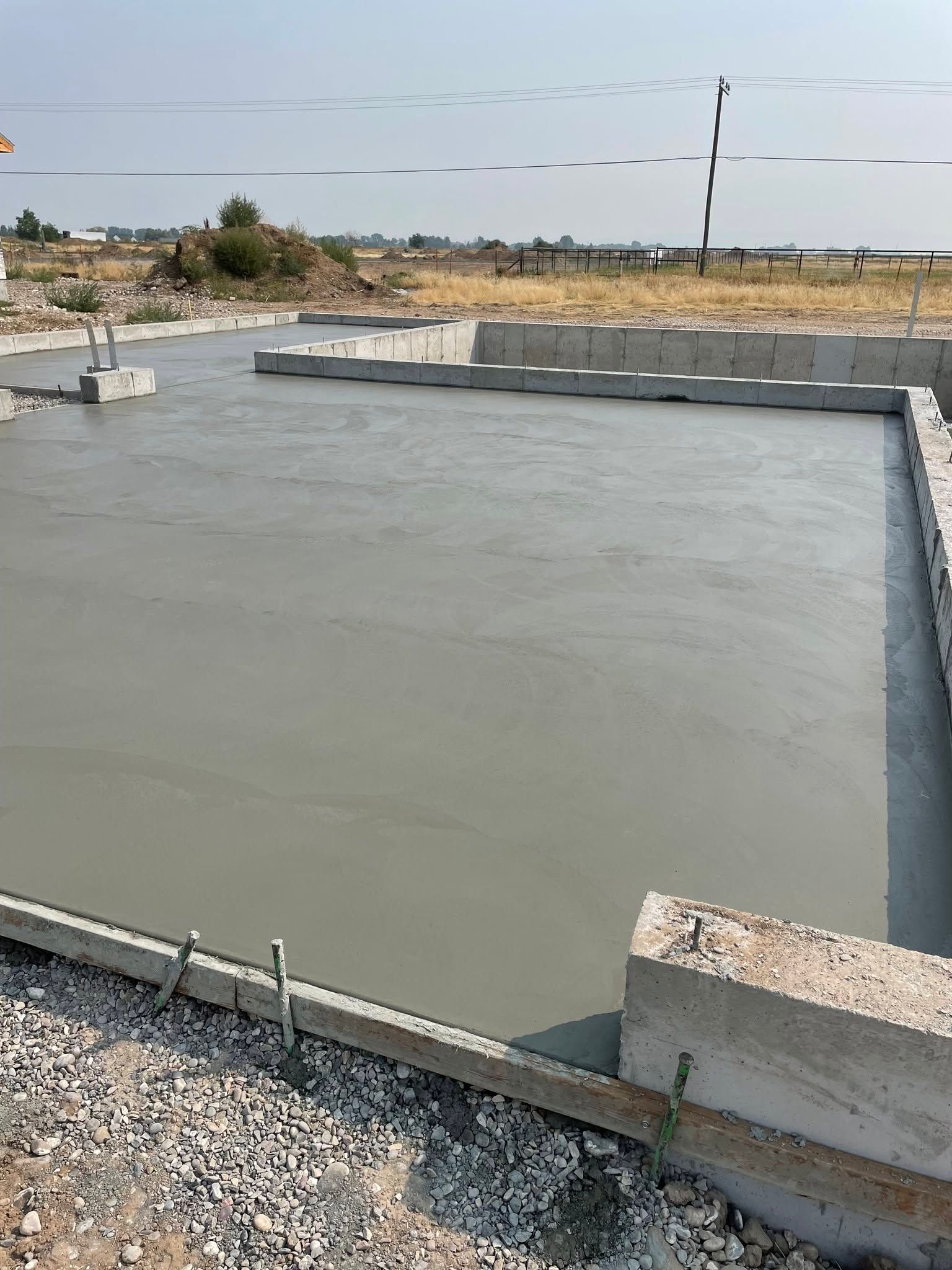
Agricultural and rural residential properties across eastern Idaho require shop floors that handle tractor loads, vehicle lifts, and welding equipment without cracking under point pressure. Standard four-inch residential slabs are not sufficient for this use case—thickness must increase to five or six inches depending on actual load requirements, and rebar is mandatory on every pour. Wolverine Concrete specs shop floors based on how they will actually be used, not just the minimum required to pour a slab.
Rebar is always used in shop floors to distribute weight and prevent cracking from concentrated loads like jack stands, vehicle lifts, or heavy equipment tires. Fiber mesh is available as an optional add for additional crack resistance, though rebar remains the primary structural reinforcement. Slab thickness starts at four inches for light garage use and increases to five or six inches when you are storing tractors, running a welder, or parking farm equipment that sits in one spot for months at a time.
Schedule a property evaluation to discuss equipment loads and determine thickness requirements for your shop build.
Why Load-Based Thickness Decisions Matter
Thickness is adjusted based on the actual equipment you plan to store or operate inside the shop, not a flat-rate standard applied to every job. A six-inch slab with rebar handles combine headers and loaded grain trucks without cracking at pressure points, while a four-inch pour fails within a season under that same load. The difference is understanding what concentrated weight does to concrete over time and building the floor to resist it from day one.
After the slab cures and you move equipment into the shop, the floor remains level under point loads from jack stands, stabilizer feet, and vehicle tires. Rebar prevents the radial cracking that develops around concentrated pressure, and proper thickness distributes weight across the slab rather than concentrating stress at the surface. You will not see sagging or surface spalling where heavy equipment sits, and the floor stays flat enough for rolling tool chests and floor jacks to move smoothly across the bay.
Shop floor installation includes rebar placement, forming, pouring, and finishing. Fiber mesh is optional and adds cost but improves crack resistance in high-use areas. The work does not include epoxy coatings, drainage systems, or vapor barriers unless specified separately, though those can be added depending on shop use and moisture conditions.
What Property Owners Usually Ask
Shop owners across Idaho Falls typically ask about thickness, reinforcement options, and how to prevent cracking under heavy equipment.
What thickness should a shop floor be for agricultural equipment?
Five to six inches with rebar is standard for tractors, combines, and loaded trailers. Four inches works for passenger vehicles and light trucks but will crack under heavier point loads within a few seasons.
Why is rebar mandatory in shop floors but optional in driveways?
Shop floors experience concentrated point loads from jack stands, equipment feet, and stationary machinery that driveways do not see. Rebar distributes those loads across the slab and prevents radial cracking at pressure points.
How does fiber mesh differ from rebar in concrete reinforcement?
Rebar is structural steel that ties the slab together and prevents large cracks from spreading. Fiber mesh reduces surface cracking and adds tensile strength but does not replace rebar in load-bearing applications.
When should I increase thickness beyond the standard four inches?
If you plan to store farm equipment, operate a vehicle lift, or park loaded trailers inside the shop, increase thickness to five or six inches. Standard residential thickness is not designed for those loads.
What preparation is required before pouring a shop floor in Idaho Falls?
Subbase must be compacted and graded for drainage, and any utility lines or floor drains need to be installed before the pour. Rebar is placed on chairs to keep it centered in the slab during the pour.
Wolverine Concrete has poured shop floors for residential and agricultural properties across eastern Idaho for 40 years, handling one job at a time with attention to load requirements and reinforcement details. Call for a free estimate and discuss thickness options based on your actual equipment and shop use.