Walkways That Stay Level Through Winter
Concrete Sidewalks and Steps in Idaho Falls for property entries and exterior walkways that resist frost heave and trip-hazard cracking
Wolverine Concrete pours residential sidewalks and steps across Idaho Falls and eastern Idaho using control joint spacing and monolithic stair techniques that prevent the cracking and settling common after hard winters. The family-operated contractor handles one job at a time, ensuring that forming, jointing, and finishing meet the standards required for surfaces that survive decades of freeze-thaw cycles. You get flatwork built for this climate, not a generic pour that cracks by the second spring.
Control joints are cut and spaced at five-foot intervals to direct thermal movement and prevent random cracking that creates trip hazards. Steps are poured monolithically with all risers hand-finished, which means each step is part of a single continuous slab rather than separately formed pieces that settle unevenly over time. This approach addresses frost heave—the primary failure mode for sidewalks and steps in the Upper Snake River Valley.
Request a detailed estimate based on your current walkway layout and property slope conditions.
How Monolithic Stair Pours Prevent Settling
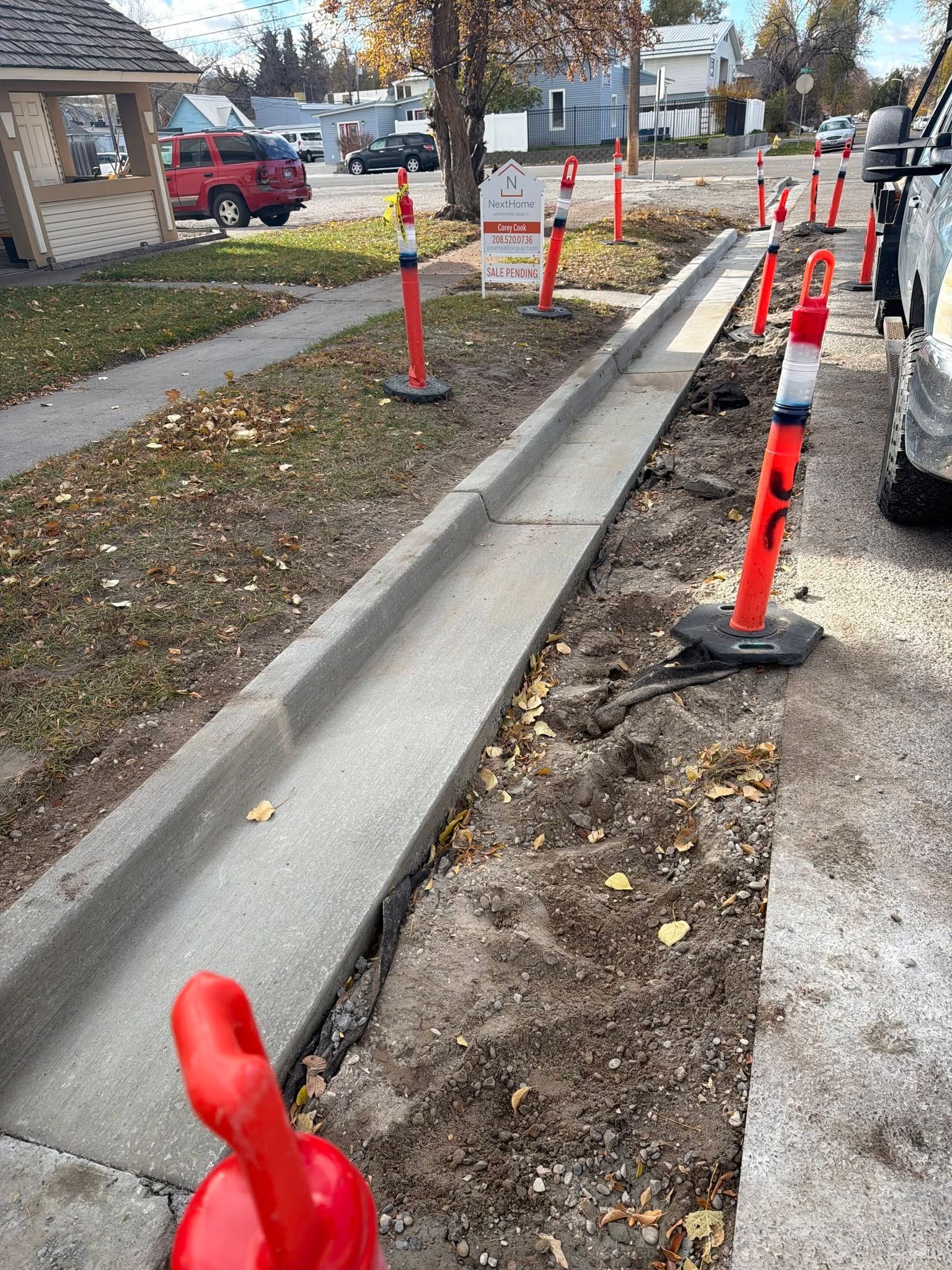
Pouring steps as a single monolithic slab ties all risers and treads together structurally, eliminating the joints where separately formed steps crack and shift when soil freezes and thaws beneath them. Each riser is hand-finished during the pour to create clean edges and uniform height, which most contractors skip in favor of faster formed pours that settle unevenly. The result is a stairway that remains level and safe for decades, even as ground temperatures swing sixty degrees between January and July.
After the concrete cures, you will notice steps that remain level and uniform in height, with no gaps opening between risers or cracking along the edges where separately formed pieces would separate. Sidewalks stay flush with the surrounding grade, and control joints prevent the zigzag cracking that develops when thermal expansion has nowhere to go. Surfaces drain properly without pooling water that freezes into ice patches during shoulder seasons.
The work includes forming, jointing, pouring, and finishing both walkways and steps. It does not include decorative finishes, stamped patterns, or colored concrete unless specified. Edge forming quality determines whether frost heave causes trip hazards, so forming is never rushed to meet a pour deadline.
Common Questions About This Service
Homeowners in Idaho Falls typically ask about control joints, stair forming methods, and how to prevent cracking from winter freeze cycles.
What are control joints and why do sidewalks need them?
Control joints are deliberate cuts in the concrete that direct thermal expansion and contraction to planned locations. Without them, concrete cracks randomly across the surface, creating trip hazards and drainage problems.
How are monolithic stair pours different from separately formed steps?
Monolithic pours tie all risers into a single slab, preventing the settling and separation that happens when steps are formed individually. Separate pieces shift as the ground freezes and thaws, creating uneven risers and gaps.
When should I replace an existing sidewalk instead of patching cracks?
If cracks run continuously across multiple sections or the surface has settled unevenly, patching extends the problem without fixing the cause. Replacement allows proper subbase preparation and control joint spacing that prevent future cracking.
Why do some sidewalks develop trip hazards after a few winters in Idaho Falls?
Frost heave pushes sections upward as moisture freezes in the soil beneath improperly compacted subbase. Control joints and edge forming reduce this movement, but only if the subbase is stable before the pour.
What should I expect during a sidewalk and step installation?
Forming takes one day, pouring and finishing take another, and curing requires at least three days before foot traffic. Control joints are cut within 24 hours of the pour while the concrete is still workable.
Wolverine Concrete has worked across eastern Idaho's freeze-thaw conditions for 40 years, handling residential flatwork with the same attention to detail on every job. Call for a free estimate and discuss control joint placement based on your property layout.