Pads Sized for What You Actually Park
Concrete RV Pads in Idaho Falls for heavy rigs and fifth-wheel trailers that require load-rated surfaces built to prevent cracking and edge settling
Eastern Idaho's RV culture and long winters mean pads must hold significant point loads from stabilizer jacks and heavy rigs without cracking or settling at the edges where weight concentrates. Wolverine Concrete adjusts thickness for actual RV size and weight rather than pouring a flat-rate slab that fails under the first loaded fifth-wheel. Standard thickness is four inches for lighter travel trailers, increasing for heavier rigs, and every pad is sloped for water runoff as standard to prevent pooling that accelerates freeze-thaw damage.
Thickness decisions are based on the RV you are parking—a 15,000-pound bumper-pull trailer does not require the same structural support as a 25,000-pound fifth-wheel with four stabilizer jacks concentrating weight at the corners. Sloping the pad directs water away from the RV and prevents standing water that freezes into ice or promotes rust on frame components. This approach addresses the specific failure modes that show up on undersized pads: cracking at jack points, edge settling, and surface pooling that shortens the life of both the pad and the rig.
Request a detailed estimate based on your RV specifications and discuss thickness requirements for your rig weight and stabilizer configuration.
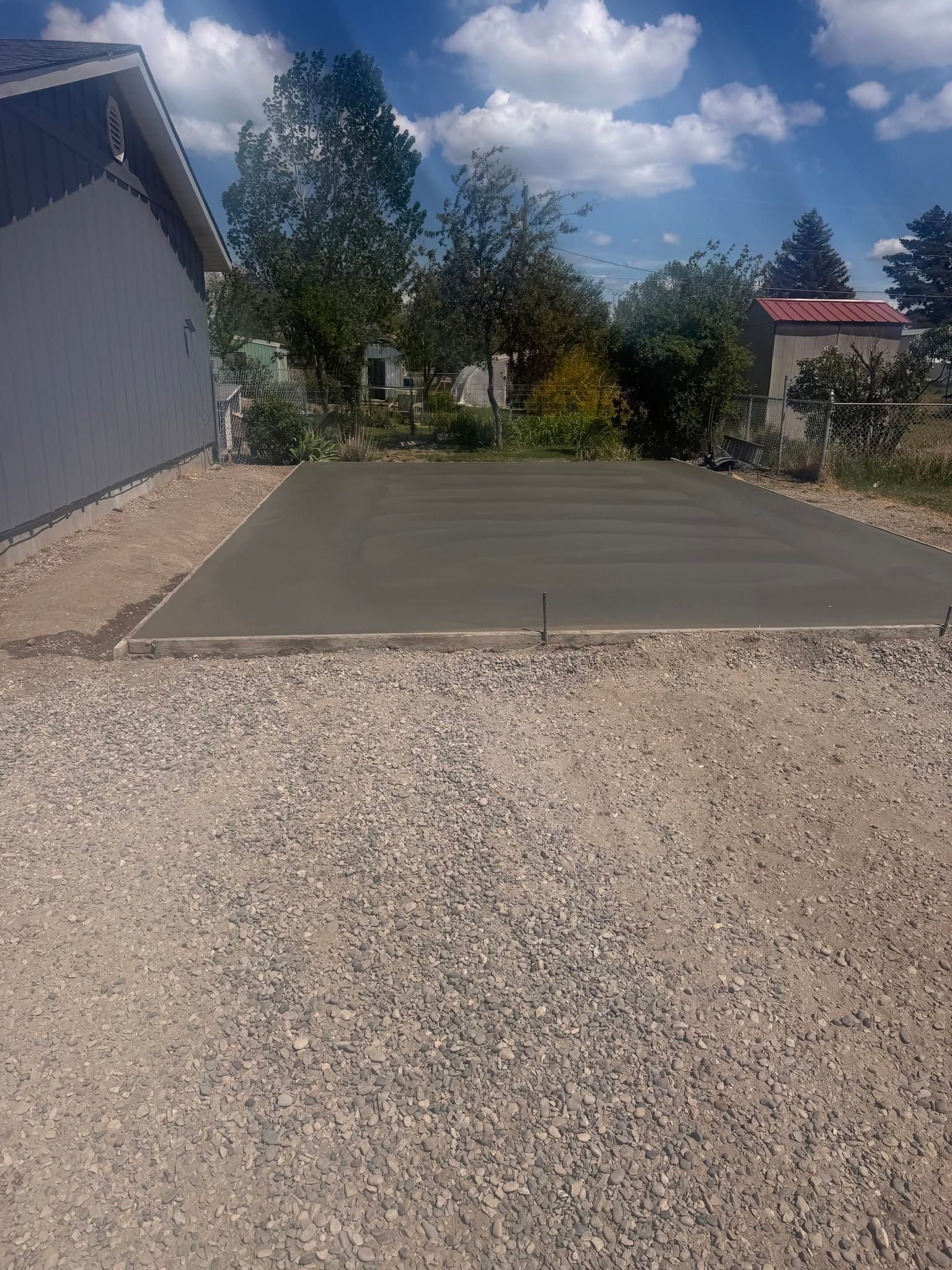
What Proper RV Pad Installation Accomplishes
Building the pad to match your actual RV prevents the point-load cracking that develops when stabilizer jacks bear down on a slab too thin to distribute the weight. Sloping the surface ensures water runs off rather than pooling under the frame or around the wheels, which reduces rust and keeps the pad surface from deteriorating through repeated freeze-thaw cycles. Proper edge forming and subbase compaction prevent the settling that causes one side of the pad to sink while the other remains level, which stresses the RV frame and creates an uneven parking surface.
Once the pad is complete and you park your rig, the surface remains level under the full weight of the RV without cracking at stabilizer jack points or sagging at the edges. Water sheds off after rainstorms instead of pooling around the wheels, and the pad stays flush with the surrounding grade rather than settling unevenly over time. You can extend and retract jacks without worrying about punching through the surface, and the slab holds up through winter storage without developing the spiderweb cracks common on thin or poorly reinforced pads.
RV pad installation includes forming, pouring, sloping, and finishing. It does not include hookups for water, power, or sewer unless those are specified separately. Thickness may increase beyond four inches depending on your RV's loaded weight and jack configuration, and reinforcement options are available for rigs that exceed standard residential load limits.
Common Questions About This Service
RV owners in Idaho Falls often ask about thickness, slope requirements, and how to prevent cracking from stabilizer jacks and seasonal storage.
What thickness should an RV pad be for a fifth-wheel trailer?
Heavier fifth-wheels and rigs with stabilizer jacks require increased thickness beyond the standard four inches to prevent cracking at jack points. The exact thickness depends on your RV's loaded weight and how many jacks concentrate pressure on the slab.
Why is sloping necessary for RV pads in eastern Idaho?
Sloping directs water away from the RV and prevents pooling that accelerates freeze-thaw damage and promotes frame rust. Standing water also creates ice hazards during shoulder seasons and weakens the slab surface over time.
How do stabilizer jacks affect concrete pad requirements?
Jacks concentrate significant weight on small contact points, which can crack undersized slabs. Proper thickness distributes that load across the slab rather than allowing it to punch through at pressure points.
When is the optimal time to pour an RV pad in Idaho Falls?
Late spring through early fall provides the best curing conditions. Cold-weather pours require extended cure times and blankets, which add cost without improving durability.
What should I consider when planning an RV pad size?
Measure your RV's overall length and width, then add clearance for door swings, slide-outs, and access around the rig. Undersized pads force you to park off-slab, which defeats the purpose of having a concrete surface.
Wolverine Concrete is a locally owned family operation with 40 years of concrete work across eastern Idaho, handling residential RV pads with the same attention to thickness and reinforcement details on every job. Free estimates are available—call to discuss your RV specifications and review thickness options based on your rig weight and stabilizer setup.